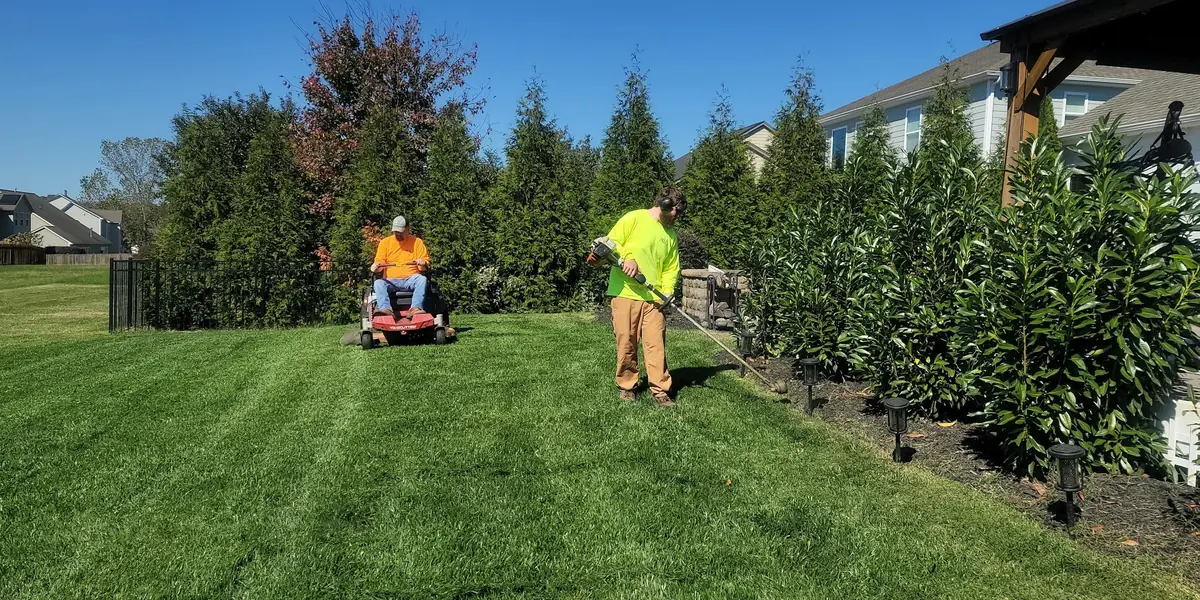
The first warm week of April, a landscaper in Tamaqua gets forty quote requests. Automation vs AI agent vs multi-agent system is how much of that pile gets handed off: one task, one role, or the whole office.
An automation does one task when something happens. An AI agent does one role and decides as it goes. A multi-agent system is several agents running a department together.
The test is in the work. If a step goes the same way each time, it is an automation. If each one needs a decision, it is an agent, and if the trouble is the hand-off between roles, it is a team of agents.
One spring inbox, forty requests
Take a three-crew lawn and landscaping company in Tamaqua. The owner runs a crew all day and does the office from the truck.
In April the requests come in through the website form, Facebook messages and voicemails. Weekly mowing, spring cleanup, mulch beds, a retaining wall that leaned over the winter. Each one needs a reply, a price or a visit, and a spot on the schedule.
By Thursday a dozen sit unanswered. A homeowner who asked Monday about mulch has hired the outfit down the road. The owner knows the price of every job by heart, and what runs out is the hours to answer.
The same pile, built three ways
Here is that inbox at three sizes. Each one is a real build, and each takes on more of the work.
- An automation: each request gets a reply within minutes asking for the address, the size of the yard and a few photos. Two days with no answer, a follow-up goes out.
- An AI agent: it reads each request and its photos, prices mowing and cleanups from the owner's own price sheet, and books a visit for anything that needs eyes on it. The leaning wall goes to the owner with a one-line note.
- A multi-agent system: that agent becomes one of several. One takes in the request, one prices it, one builds each crew's week, one sends the invoice when the job is marked done, and one sends the Monday report.
If a step needs a decision, an automation cannot take it. An agent can.
Automation vs AI agent vs multi-agent system comes down to who decides
An automation decides nothing. Think of it like this: if a request comes in, the reply goes out. It is the simplest place to start for exactly that reason.
An agent reads what is in front of it and picks what to do. Is this a mow, a cleanup, or a job that needs a visit? Is the photo of a lawn or of a wall that is coming down?
Sorting that is the role, and the agent does it all day. One store's price lists, done by an agent, are told in the post on what AI integration is for a small business.
A multi-agent system fits when the decisions belong to different roles and the work falls between them. The request got priced, but nobody put it on a crew's week. The job got done, but the invoice waited until Sunday night.
Which one the landscaper needed first
Freeborn Digital maps how the work moves through a business before anything is built, and picks the first place it pays. In this company the prices were never the problem. The owner knew them cold, and the replies were what slipped.
So the first build was the agent. It answers each request the day it lands, from the price sheet and the calendar. It works inside the website form, the Facebook inbox and the scheduling software the company already had.
The jobs it cannot price, it hands to the owner in one line. A drainage problem behind a garage, for one, waits in the owner's phone with a note.
A Tuesday in May looks like this. Fourteen requests come in, most are priced and answered before lunch, and two visits land on Thursday along the owner's route.
The crew schedule and the invoices come next, as more agents on the same system. That is the last of the four steps on every build: Freeborn Digital watches it, tunes it, and adds the next piece.
How Freeborn Digital builds it
You tell Freeborn Digital the problem in plain words. You do not need to know which of the three it is. A few lines about the work that eats your week is enough to start.
Freeborn Digital maps it, builds the automation, the agent or the system the work calls for, and installs it inside the software you already use. Freeborn Digital builds this as AI integration.
You choose which actions run on their own and which wait for you, like a quote over a set amount. Every action is logged with what was done and when.
Questions about automations, agents and multi-agent systems
Which one should a small business start with?
The one that fits the job closest to the money. A step that goes the same way each time is an automation, and one that needs a decision is an agent. Freeborn Digital maps the business first and says which.
Can an automation grow into an AI agent later?
Yes. The landscaper's reply automation could become the agent that prices the jobs, inside the same software. Freeborn Digital adds the next piece when the business is ready for it.
Is a chatbot the same as an AI agent?
A chatbot answers what someone types into it. An agent does a role inside your software. It reads the request, checks the price sheet and the calendar, books the visit, and tells you what it did.
Does a small business need a multi-agent system?
Only when the work falls between roles. A business whose trouble is one role, like the replies, needs one agent. A system is several agents, built when the hand-offs are what breaks.
The forty requests will come in again next April. This time each one gets an answer the day it lands, and the owner stays on the mower. Which one is yours starts with a few lines at freeborndigital.com/start, or a text to 570-617-7655.
Want this for your business?
Start a Project