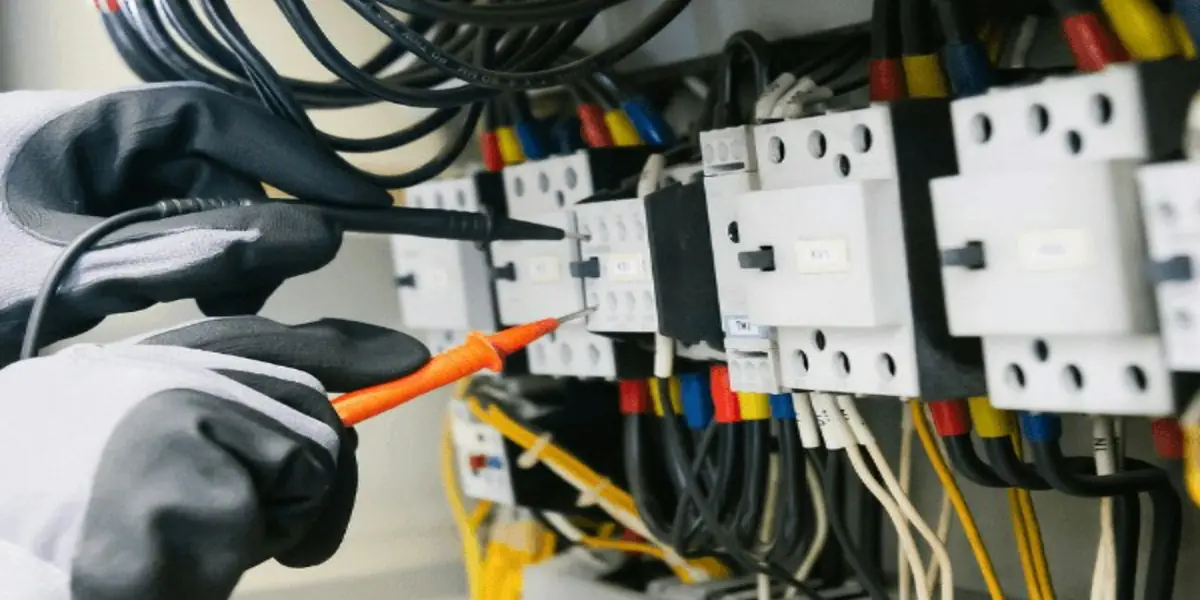
An electrician in Orwigsburg types quotes at eleven at night, from photos on a phone. What is a multi-agent system for a business? It is several AI agents, each with one role, passing work along inside the software you already use.
A business needs one when the work that slips is the hand-off between roles, and one agent would only cover one of them.
Eleven at night with forty photos
Take a two-crew electrical contractor in Orwigsburg. The owner wires houses all day and walks three estimate visits a week on the drive home.
Leads come in by phone, through the website form, and as Facebook messages. Some get written on the back of a work order. Some sit in a phone until Sunday.
At night the owner scrolls through forty photos of panels and basements and types each quote by hand from the price list. A homeowner who asked about a panel upgrade on Monday gets a number on Friday, and by then has called another shop.
Every role in a sales desk can be named
Look at that week as roles and there are five. Someone answers the lead, someone books the visit, someone writes the quote, someone checks the price, and someone calls back when the customer goes quiet.
In this shop the owner is all five, after dark. The work inside each role gets done well enough. What breaks is the space between them: the lead that never got a visit, the quote that never got a second call.
That space is where one agent stops and a team of agents starts.
What is a multi-agent system for a business, in one shop
Freeborn Digital builds the shop a sales desk of agents. Each has one job and hands its result to the next:
- The intake agent reads each call note, form and Facebook message and puts the lead in the CRM with the address and the job.
- The scheduler books the estimate visit into an open slot on the owner's route and texts the customer the time.
- The quote writer reads the owner's photos and notes from the visit and drafts the quote from the shop's own price list.
- The checker reads each quote against the price list and holds any job over the owner's limit for a yes.
- The follow-up agent texts the customer when a quote sits two days, and books the job when they say go.
- The reporter sends one message on Monday morning.
The quote is in the customer's inbox before the owner is back in the truck.
A Tuesday with the desk running
At 8:10 a form comes in from a 1960s ranch in Schuylkill Haven: the lights flicker when the dryer runs. The intake agent logs it, and the scheduler books a visit for 4:30, on the owner's way home.
At 4:50 the owner takes six photos of the panel and says two lines into the phone. By 5:30 the quote writer has the panel upgrade priced from the shop's list.
The checker sees it is over the owner's limit and holds it with one line: 200-amp panel, ranch in Schuylkill Haven, your call. The owner reads it in the driveway, taps yes, and the quote goes out.
Thursday the customer has not answered, so the follow-up agent texts them. Friday they book the job for next Wednesday, and it lands on the crew's calendar.
Each agent's work is on record
The owner decides what runs alone and what waits: any quote over a set amount, any discount, any message about a payment. Each action is on record, with which agent did it and when.
Monday at seven one message lands: what came in, which visits are booked, which quotes went out, and which customers have gone quiet. If the owner wants one, a dashboard shows what each agent is doing as it happens.
One agent covers one role, a system covers the chain
An AI agent is one employee doing one role. The post on what an AI agent is for small business follows a garage whose customer texts were the one role eating the owner's nights.
The electrician's problem is the chain. An agent on the quotes alone would leave the leads unbooked and the quotes unchased. When the trouble lives in the hand-offs, the build is a team of agents.
How Freeborn Digital builds the shop's system
You tell Freeborn Digital how the department runs today: the roles in it, who hands what to whom, and which software it lives in. A call is enough, and you do not need a specification.
Freeborn Digital maps the roles and the hand-offs, then builds each agent and what comes to the owner for approval. It goes into the shop's phone, CRM, calendar and price list, with nothing new for the crews to learn.
Then Freeborn Digital keeps it running, tunes it, and adds the next piece when the shop is ready, like ordering the parts for the jobs that were won. Freeborn Digital builds this as multi-agent systems.
Questions about multi-agent systems for a business
Is a multi-agent system too big for a small business?
The size of the business does not decide it. If one person carries five roles in a row and the work stalls between them, a two-crew shop has a department worth handing to agents.
Can it start with two or three agents?
Yes. Freeborn Digital maps the department, builds the first agents where the work stalls most, and adds the rest of the chain once the shop has seen it run.
What if one agent gets something wrong?
The checker reads the work before it goes out, and anything it doubts waits for you. Every action is logged with which agent did it, and Freeborn Digital tunes the agent from what you correct.
Who does the customer talk to?
The same shop number and email they always used. Messages go out in the owner's words, and anything that needs a person comes to the owner with a one-line note.
At eleven at night the phone sits on the charger. The Schuylkill Haven panel is booked for Wednesday, and the day's photos are already priced. Tell Freeborn Digital where your work stalls at freeborndigital.com/start, or text 570-617-7655.
Want this for your business?
Start a Project