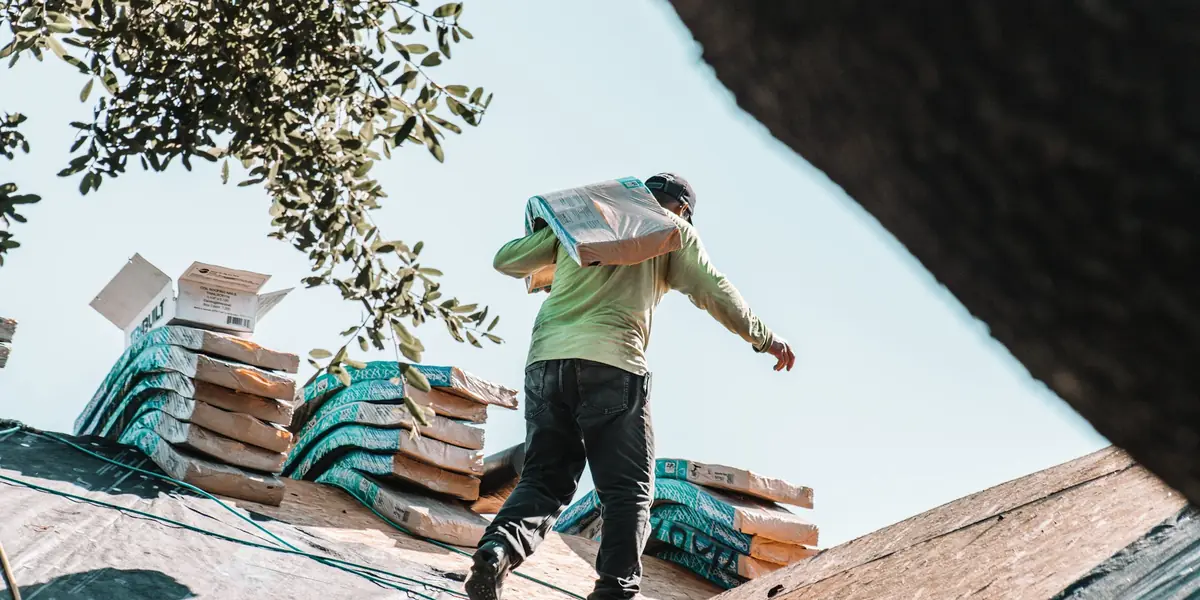
A storm tears shingles off a roof in Orwigsburg, and the homeowner grabs a phone. How does a small business website get found? Google, the map pack and AI search engines read it, and each one names the business whose pages answer the search.
Then the site has to win the call on that phone, in the first few seconds. Here is how both halves work, told through one roofer's website.
Three places read your site before a customer does
The homeowner can look three ways. They type roof repair Orwigsburg into Google and get a list of results. They glance at the map pack, the three listings with the call buttons, under the map.
Or they ask ChatGPT or Gemini who can fix storm damage on a roof near Orwigsburg today. The engine gives one name, sometimes with a link.
All three read the same things: the words on your pages, the towns you name, the questions you answer, and your Google listing. A business that is missing from those words is missing from the answer.
One roofer's site, and where the storm call went
Take a roofing company in Orwigsburg with one truck, a trailer and a crew of three. The owner has been fixing roofs in Schuylkill County for years, and the website was made in an afternoon a long time ago.
The home page is a slider of roof photos. One page called Services says roofing, siding and gutters in a single paragraph. The phone number sits in the footer, and the contact form asks eleven questions.
The site never says storm damage, never says Orwigsburg outside the address, and never says the crew will tarp a roof the same day. The Google listing shows Saturday hours the site does not.
So when the storm comes through, Google, the map and the AI engine read that site and find a slider. The roofer two towns over has a page called storm damage roof repair that names Orwigsburg, and that is the name that comes back.
How does a small business website get found, page by page
Freeborn Digital builds that roofer a site where every true thing about the business is written where Google and AI search engines read it. For the company in Orwigsburg, the site holds:
- A page each for storm damage, roof repair, roof replacement and gutters
- Orwigsburg, Schuylkill Haven, Pottsville and Deer Lake named on each of those pages
- "Can you tarp my roof today?" asked on the page and answered in the owner's words
- Structured data behind every page that says this is a roofer, where it works and when it answers
- The Google listing showing the same hours, towns and number as the site
None of it is new information. It is what the owner says on the phone every week after a storm, written down once, on the page where the question gets asked.
Google and AI search engines can only name you for what your pages already say.
The post on what AEO is for a local business follows that one-name answer from an AI engine in more detail. Getting named is half the job, though. The homeowner still has to call. Google even tested an AI local pack with no Call button, and the post on the Google AI Overview local pack covers what was left.
The first three sections of the page decide the call
The homeowner taps the link standing in the driveway, rain still coming off the gutters. Most people never scroll to the bottom of a website, so the site has to earn the call near the top.
Every Freeborn Digital site is built as a funnel, in the same order, and the roofer's storm damage page follows it.
The hero says storm damage roof repair in Orwigsburg, with the call button beside it. The homeowner knows in five seconds they are in the right place.
Right under it is the proof: photos of roofs the crew has fixed and the reviews from those homeowners, seen before anyone scrolls.
Then what the roofer offers, tarping, repair and replacement, each with what is included and its own button. Last comes a form that asks a few lines, the number one tap away, and the questions people ask before they call, answered.
The faster a visitor can reach you, the more of them do. The call button sits in the header of every page and in every section. The form asks only for what it takes to call back.
When what a business sells looks best moving, the hero can move too, with the words held still on top. The post on what an animated website is follows one bike shop through it.
How Freeborn Digital builds it
You tell Freeborn Digital the business: what you do, where, who calls you and what they ask before they do. For the roofer, that is a short call about the truck, the towns and what homeowners ask the morning after a storm.
Freeborn Digital maps what people search in Google and AI search engines about roofing in Orwigsburg and the towns around it. Then it builds the whole site: the pages, the wording, the structured data, the listing matched to the site, fast on every phone.
Freeborn Digital launches it and keeps it current. When the crew starts doing metal roofs, the owner sends the change and the page goes up. Freeborn Digital builds this as a custom website, with AEO, GEO and SEO built into every site.
When Google re-sorts its results, these are the pages it reads again: the post on the Google November 2026 core update follows an electrician in Minersville through one.
Questions about getting a small business website found
Why doesn't my website show up when people search what I do?
Usually because the pages never say it. If the site names the service and the town nowhere a search engine reads, Google and AI search engines have nothing to match the search against, so they name a business whose pages do.
Do I need a separate page for every service?
Yes, for each service people search for. A page for storm damage and a page for gutters each answer one question, in your towns. One Services paragraph gives Google and AI search engines little to match.
Does my Google listing need to match my website?
Yes. Hours, towns, services and phone number should read the same in both places. Freeborn Digital matches your listings to the site, so an engine checking one finds the same facts in the other.
Does a slow website get found less?
Speed on a phone is one of the things Google reads, and a slow page loses the visitor who did find it. Every Freeborn Digital site is built for the phone first and checked on every screen size.
The homeowner in Orwigsburg is still standing in the driveway with the phone. Tell Freeborn Digital what you do, where, and what people ask before they call, at freeborndigital.com/start or 570-617-7655, and the name and the call button they see are yours.
Want this for your business?
Start a Project