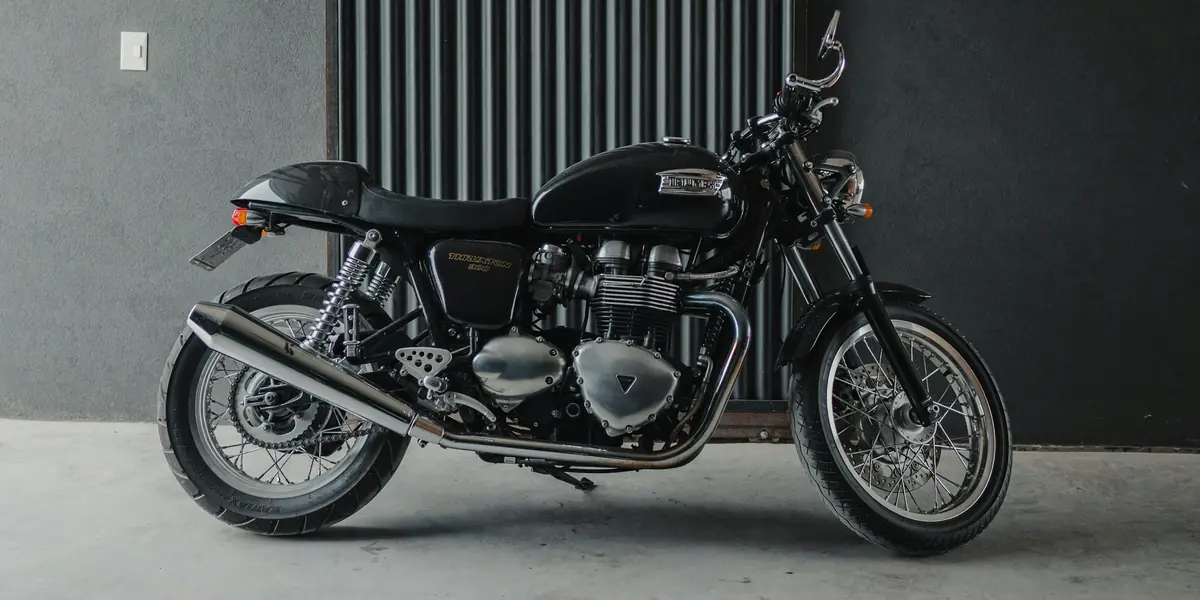
The custom bike on the shop's home page is parked, kickstand down, engine off. What is an animated website? It is one where part of the page moves, here the bike rolling through the hero while the words hold still.
The rest of this is when that motion is worth it, how it gets made, and what Google and AI search engines read on a page that moves. It is told through one motorcycle shop.
A photo of a bike sits still on the page
Take a custom motorcycle shop in Tamaqua. Two bays, a lift, a paint booth out back, and an owner who builds one bike at a time from the frame up.
The people who buy from a shop like this buy with their eyes. They want to see the tank catch the light and the bike lean into a turn. They scroll Facebook and Instagram for exactly that.
The website shows none of it. The home page is one photo of a finished bike in the lot with the shop's name over it, and the gallery page under it is more photos of more parked bikes.
A rider taps the site from a post on a Saturday morning and sees the same bike, still parked. The photo says the shop exists. It leaves out the one thing the rider came to see.
What is an animated website, scene by scene
On an animated website the hero is a scene. For the shop in Tamaqua, the headline sits over the open bay door at dusk. The bike rolls out, leans past the camera, and heads down the road.
The words never move. The shop's name, what it builds, the town and the call button stay put the whole time, so a visitor reads them while the bike goes by.
The motion can go anywhere on the page. On the bike shop's site it goes in four places:
- The bike rolling out of the bay, in the hero
- The paint booth behind the headline on the paint page
- Each finished build coming into view as the rider scrolls the gallery
- The shop's logo, at the top of every page
Everything else holds still. The phone number, the form and the questions riders ask before they call read the same as on any plain page.
Motion is worth it when the thing that moves is what you sell
An animated website fits a business whose customer buys what they see. A bike, a truck, a boat, a charter flight, a kitchen, a lake house for rent. When the work looks good moving, a still photo shows half of it.
A business people call in a hurry needs a different first five seconds. A homeowner with water on the basement floor wants the number, and the site puts it in front of them before anything else.
Both still need the funnel under the motion: the hero, the proof, what you offer, and the form. The animation sits on top of that order.
Motion is worth it when the thing that moves is the thing you sell.
The post on how a small business website gets found walks one roofer's site through those sections, top to bottom.
The scene is made in Higgsfield and timed in After Effects
The bike shop's owner does one part of the work. They tell Freeborn Digital the business: what the shop builds, who buys, and the thing people should see move. For this shop, that is a bike rolling out of the bay at dusk.
Freeborn Digital makes the scene in Higgsfield, AI video and visuals of the shop's own subject, made for this page. The bike on the screen is the shop's bike at the shop's own door.
The motion is designed and timed in Adobe After Effects. When the door opens, how long the bike holds before it leans, how the headline stays put, and how each section arrives on scroll are all set there.
Then it goes into a Freeborn Digital site, built as a funnel with AEO, GEO and SEO in it and the shop's tools connected. Launched, and kept running. Freeborn Digital builds this as an animated website.
Google and AI search engines read the words that hold still
A scene does not tell Google what the shop does. The words do: custom motorcycles, Tamaqua, paint, and the questions riders ask before they call.
An animated site is built the same way as every Freeborn Digital site, with AEO, GEO and SEO in it. When a rider asks an AI who builds custom bikes near Tamaqua, the words on the shop's pages are what it reads.
The site is built for the phone first and checked on every screen size. The rider who opens it at a gas station sees the bike roll out, and the call button is one tap away.
Questions about whether an animated website is worth it
Is an animated website worth it for a small business?
It is when customers buy what they see: a vehicle, a product, a place, finished work. The motion shows what a photo leaves out. When customers mostly need your number fast, the funnel matters more than the motion.
What do I send Freeborn Digital to start an animated website?
What you do, who calls you, and the thing people should see move: the bike, the truck, the shop, the work. A few lines or a call is enough, and Freeborn Digital makes the scene from there.
What else on the page can move besides the hero?
Your product, the scene behind a headline, each section as it comes into view, your logo, a video built into the page, the background behind a section, and the way one page hands off to the next.
Does the animation go into the website I have now?
It goes into a Freeborn Digital site, built as a funnel with AEO, GEO and SEO in it and your tools connected. The domain, the site and the animation are yours, hosted where you choose.
The bike in Tamaqua is still parked on that home page. Tell Freeborn Digital what you sell and what people should see move, at freeborndigital.com/start or 570-617-7655, and the next rider who taps the site watches it roll out of the bay.
Want this for your business?
Start a Project